Nobody tells you how long it actually takes.
That is one of the things that frustrates me most about how online business is taught. The courses and the tutorials make it look like a weekend project. Pick a niche, set up a funnel, write some emails, start promoting. Easy.
And then you sit down to do it.
The actual timeline
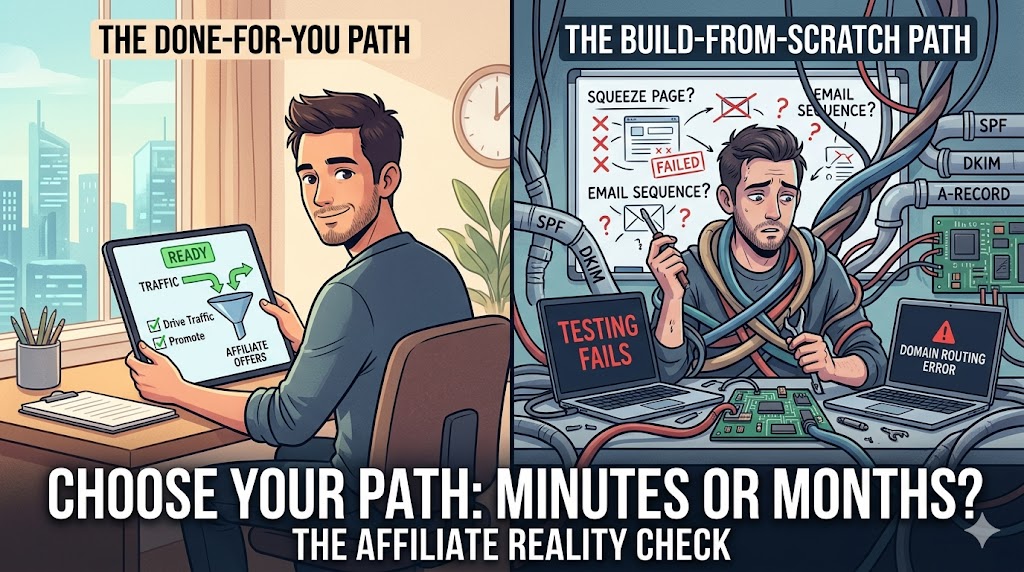
Let us be honest about what building an affiliate funnel from scratch actually involves.
First, you need a domain and hosting. That is relatively quick — maybe an hour including setup, assuming everything goes smoothly.
Then you need your website platform configured. If you are using WordPress, that means choosing a theme, installing plugins, configuring settings, learning where everything is. A day, conservatively, if it is your first time.
Then you need a squeeze page. That means either learning a page builder, hiring someone, or using a template — and then customising that template to actually look professional, load fast, and convert visitors into subscribers. Another day or two.
Then you need an email service provider. Sign up, configure your settings, set up your domain authentication so your emails do not go to spam, create your list, set up your opt-in form, connect it to your squeeze page. Half a day if nothing breaks.
Then you need a lead magnet or compelling opt-in offer. Something people actually want to give their email address for. Writing and designing that is another day, minimum.
Then you need your follow-up email sequence. Five to ten emails that build trust, introduce the offer, handle objections, and convert subscribers into buyers. Writing those properly takes days, not hours.
Then you need to connect everything. The opt-in form to the email provider. The thank-you page redirect to the offer. The confirmation email to the correct list. The follow-up sequence to the correct trigger. Each connection is a potential point of failure.
Then you need to test the whole thing end to end. Multiple times. Because something will always be broken the first time.
What the realistic number looks like
If you have done this before, you are probably looking at two to four weeks of part-time work to get everything live and functional.
If you have not done this before, double it. Minimum. Factor in the learning curve for every tool, the troubleshooting time for every integration, and the inevitable moment where you get completely stuck on something that should be simple.
Six to eight weeks of evenings and weekends, for most first-timers, is not an unusual timeline.
What happens to most people in that window
A lot happens in six to eight weeks.
Life gets in the way. Motivation drops. A tool turns out to be more complicated than expected. One part of the build stalls and the rest starts to feel pointless. The gap between where you are and a working business starts to feel insurmountable.
Most people do not give up because they stop caring. They give up because the project is longer and harder than they were told, and they are doing it alone, with no way to know if they are even doing it right.
The alternative
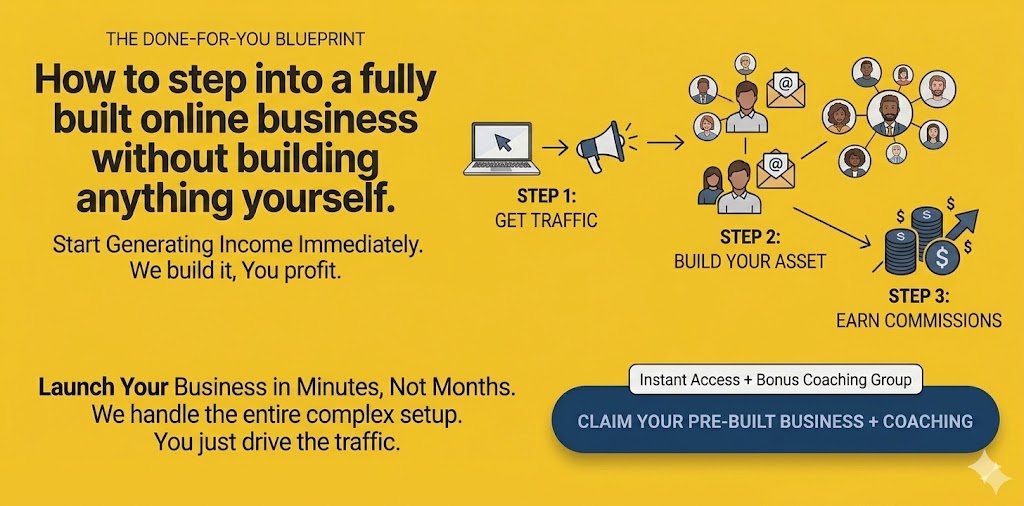
The alternative to building from scratch is stepping into something that is already built.
Not a template. Not a guide. A live, operational funnel — squeeze page, email sequence, offer, automations — already set up and ready to accept traffic. Your job becomes driving visitors into it, not constructing it.
That changes the timeline from months to minutes.
If you want to see what that looks like, it is all here.